The IRS Underpayment Penalty Explained (2026 Updates)
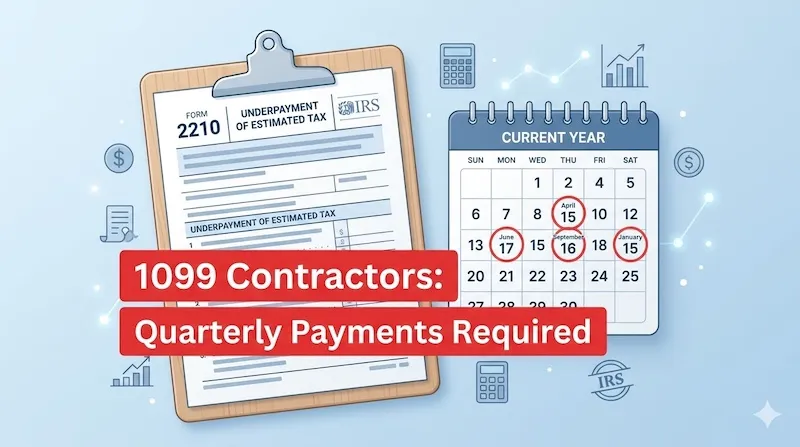
The U.S. tax system is "pay-as-you-go." The IRS expects you to pay taxes continuously throughout the year as you earn income, either through employer withholding (W-2) or by making quarterly estimated tax payments. If you don't pay enough by the time you file your return, you may face the Underpayment of Estimated Tax Penalty.
For the first quarter of 2026, the IRS underpayment penalty interest rate sits at 7% per year. This is not a flat fee; it functions like interest on a loan, calculated daily from the date the quarterly payment was due until the date it is paid.
How to Avoid the Penalty: IRS Safe Harbor Rules
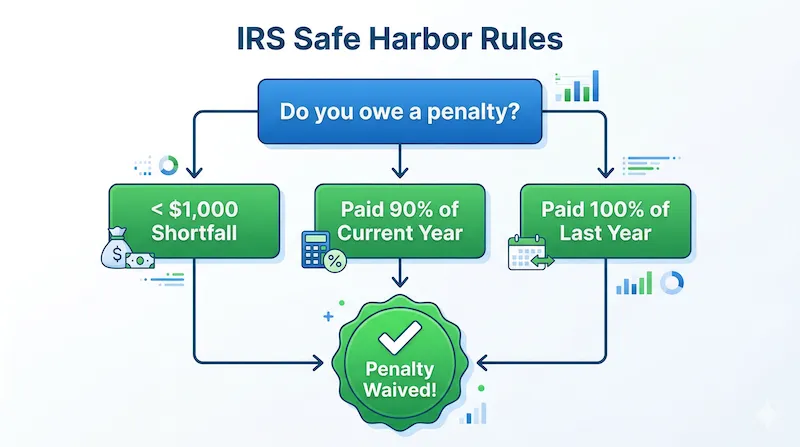
Fortunately, the IRS provides "Safe Harbor" rules. If your payments for the year meet any one of the following three conditions, you will not owe a penalty, regardless of how large your tax bill is on April 15th:
| Rule Name | Criteria to Avoid Penalty |
|---|---|
| 1. The $1,000 Rule | Your total tax shortfall (Tax owed minus withholdings) is less than $1,000. |
| 2. The 90% Rule | You have paid at least 90% of the tax shown on your current year's tax return. |
| 3. The 100% Rule | You have paid at least 100% of the tax shown on your previous year's tax return. |
| High-Income Exception | If your previous year's AGI was over $150,000 ($75,000 if married filing separately), you must pay 110% of last year's tax instead of 100%. |
Why Gig Workers and 1099 Contractors Get Penalized
W-2 employees rarely face this penalty because their employers automatically withhold taxes based on their W-4. However, freelancers, gig economy workers (Uber, Doordash), and hospitality workers with under-reported cash tips are at high risk. If you are a bartender or server, failing to track your daily cash income often leads to massive tax underpayments at year-end. We highly recommend using a daily tip tracker logbook to stay compliant and avoid surprise IRS bills.
If you transitioned from a W-2 salary job to hourly contracting mid-year, you must recalculate your expected annual tax burden. You can use our salary to hourly converter to establish your baseline gross income before making quarterly IRS estimated payments (Form 1040-ES).