The EVV Mandate: Why a Paper HHA Timesheet is Your Backup
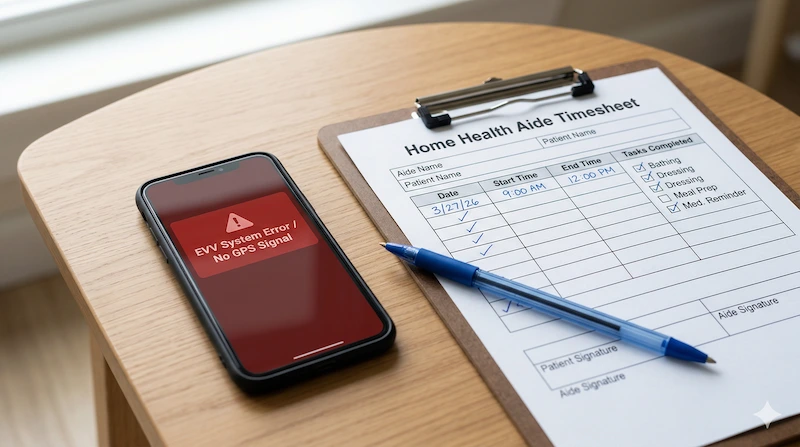
Under the federal 21st Century Cures Act, all Medicaid-funded personal care services must use Electronic Visit Verification (EVV). This means caregivers must use a smartphone app to log their GPS location, time-in, and time-out.
"Technology fails. EVV apps crash, rural homes lose cell service, and phones die. When the app fails, a physical paper timesheet signed by the patient is the only legal way to prove you worked and ensure you get paid."
Documenting for Medicaid: ADLs vs. IADLs
If you work for an agency, you know that Medicaid audits are incredibly strict. You cannot simply write "helped patient" on your time log. You must specify whether you performed ADLs (Activities of Daily Living) or IADLs (Instrumental Activities of Daily Living). Mixing these up can lead to rejected claims.
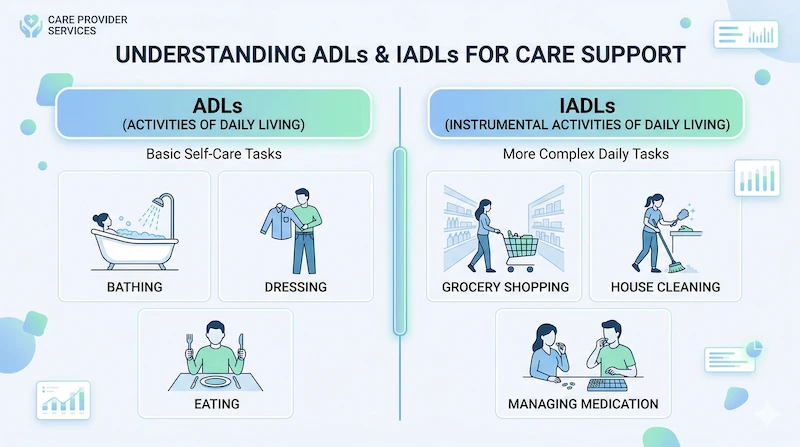
| ADLs (Basic Survival Tasks) | IADLs (Independent Living Tasks) |
|---|---|
| Bathing, showering, and grooming | Housekeeping and laundry |
| Toileting and incontinence care | Meal preparation and grocery shopping |
| Feeding (putting food in mouth) | Managing medications and pills |
| Transferring (bed to wheelchair) | Transportation or running errands |
Live-In Caregivers and the 5-Hour Sleep Rule
Wage theft is rampant among 24-hour live-in aides. By default, many agencies deduct 8 hours for sleep time and 3 hours for meals, only paying for 13 hours of work. However, the U.S. Department of Labor (DOL) has a strict rule: If your sleep is interrupted by the patient to the point where you do not get at least 5 continuous hours of sleep, you must be paid for the entire 24-hour period.
If you log multiple nighttime interruptions on your timesheet above, you should use an overtime calculator to ensure your agency pays you 1.5x your regular rate for those extra hours. When translating short 15-minute nighttime tasks into payroll numbers, use a decimal hours converter to maintain accuracy on your timesheet.